
Captive Collective
Exploring the people, perspectives, and decisions behind successful captive insurance programmes.
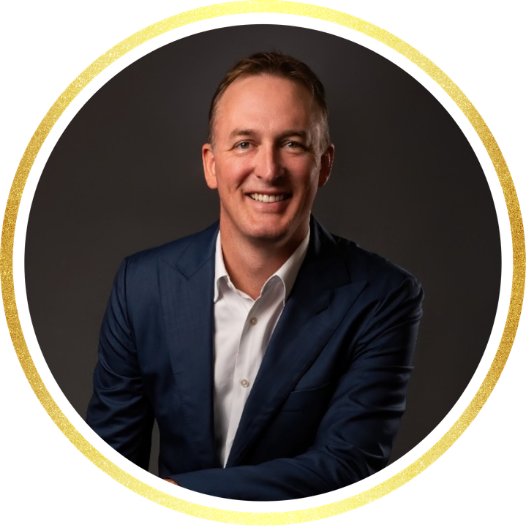
Featuring:
Dylan Bryant
Editor’s Note: This interview was conducted while Dylan Bryant was serving as Executive Manager, Group Insurance at Commonwealth Bank of Australia. Since then, he has been appointed Head of Zurich Multinational & Captives, APAC.
From choosing Zurich Insurance over Commonwealth Bank of Australia simply because it was closer to home, to returning decades later to lead Commonwealth Bank’s captive insurance programme, Dylan Bryant’s career has come full circle.
Having worked across Australia, the United Kingdom, the United States, Hong Kong and Singapore, he has experienced the insurance industry from every angle—from insurer and broker to corporate risk manager. Today, Dylan serves as Executive Manager, Group Insurance at Commonwealth Bank of Australia.
A Global Career
Throughout his career, Dylan has worked across multiple organisations and international markets, broadening his perspective on the insurance industry.
Each transition gave him a deeper understanding of how insurers, brokers and corporate organisations approach risk from different angles.
“I’ve never wanted to be an expert in just one area,” he explains. “I’ve always wanted to understand how the whole ecosystem fits together.”
That broad perspective would eventually prove invaluable when he crossed to the corporate side and began managing a captive himself.
From Understanding Captives to Running One
Although Dylan had worked with captive programmes throughout much of his career, stepping into Commonwealth Bank’s captive operation presented an entirely new challenge.
“I’d done a lot of captive fronting programmes, but it’s never the same until you’re actually running one,” he says.
Managing a captive goes far beyond insurance placements or renewals. It requires aligning the captive’s strategy with broader business objectives, engaging stakeholders across the organisation and continually demonstrating the value it creates.
“It’s about bringing everyone along on the journey, sharing knowledge about the captive while learning about the business and its risks,” he explains.
His approach is simple: “First understand the business strategy, then figure out how to use risk management, risk transfer and captives in support of that strategy.”
Building a Stronger Captive Community
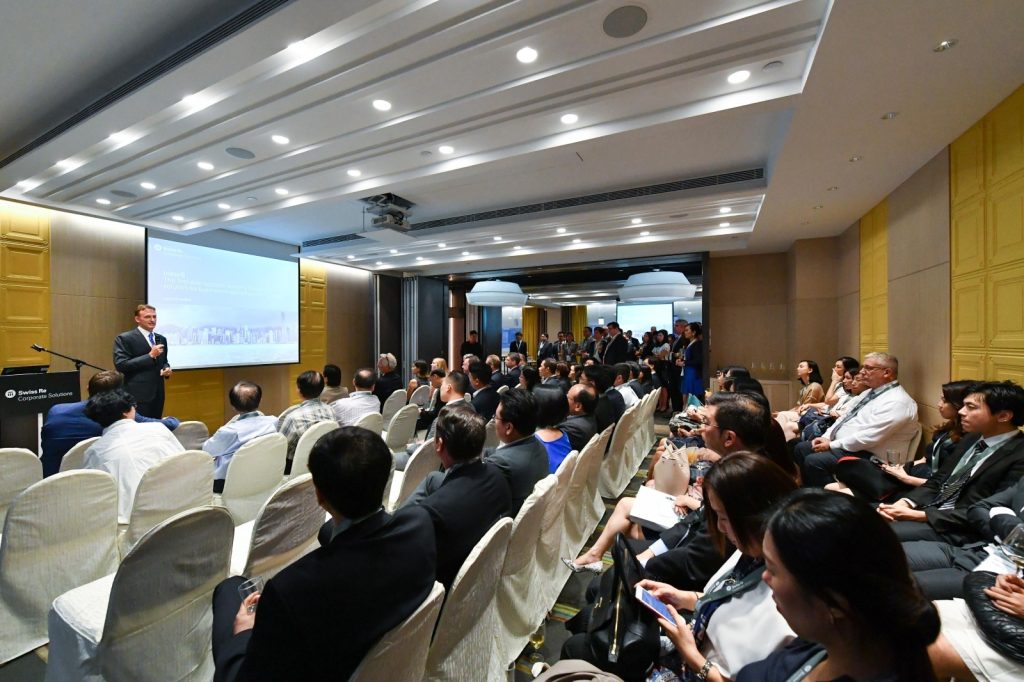
Having worked across insurers, brokers and the corporate sector, Dylan has long been passionate about education and knowledge sharing.
Over the years, he has helped develop professional education programmes covering captives, multinational insurance programmes and alternative risk transfer, believing that stronger education leads to better risk outcomes.
Instead of waiting for others to lead these conversations, he believes experienced practitioners have a responsibility to contribute their own knowledge for the benefit of the wider industry.
“I think as leaders and practitioners, it’s our responsibility to create content so other people can learn,” he says. “I like creating content that people can learn from because then that creates the conversation.”
That philosophy extends naturally to industry associations and forums such as the Asia Pacific Captive Forum (APCF), where experienced professionals share practical experiences with the next generation of captive owners.
The Future of Captives
As captive insurance continues to evolve across Asia-Pacific, Dylan believes the industry’s greatest opportunity lies not only in new legislation, but in strengthening the community that supports it.
With the anticipated introduction of Protected Cell Company (PCC) legislation, Dylan believes Asia-Pacific has an opportunity to accelerate captive adoption while attracting a new generation of talent into the industry.
“If the PCC legislation comes in, there’s going to be a real opportunity for new captives. And with new captives comes new jobs and new opportunities,” he says.
For Dylan, the future of captives will not be built by individual organisations working in isolation. It will be shaped by practitioners who are willing to share knowledge, mentor others and collaborate across the industry.
After all, his own career began with a simple decision to take the shorter walk to work.
More than two decades later, that unexpected decision has brought him back to where his career might have begun, this time with global experience, a broader perspective, and a commitment to helping the captive community grow together.
Become Our Next Featured Captive Owner
Contact Info
info@captive.sg
Email address
5 Shenton Way, Singapore 068808
Head Office
Working Hours
Mon - Fri: 09:00AM - 06:00PM
Sat & Sun: Closed
Follow Us
